Culture & Heritage
Galang Refugee Camp: The History of the Boat People near Singapore
For 17 years, an island south of Batam was home to tens of thousands of people who had fled Vietnam by sea. What happened at the Galang camp, why it is remembered differently from other camps, and what you can still see today.
Sarah Tan
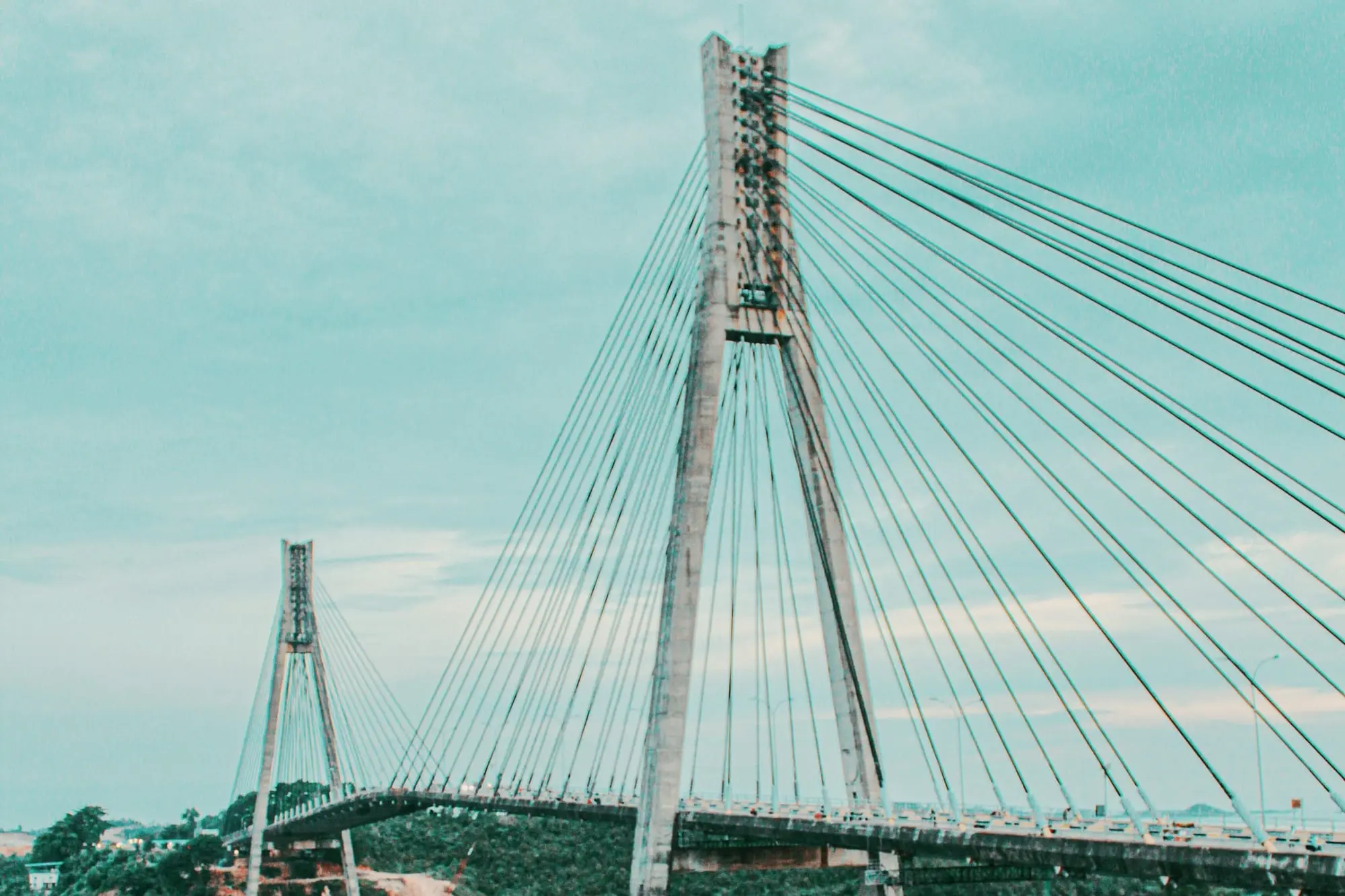
Less than two hours from Singapore, at the end of the Barelang bridges, lies a quiet stretch of forest with a church, a pagoda, a small museum and a cemetery. Between 1979 and 1996 this was the Galang Refugee Camp, where people who had fled Vietnam, Cambodia and Laos waited, sometimes for years, to learn which country would take them in.
Many of them are still alive. Their children and grandchildren now live around the world, and some come back to Galang to visit graves and look for the barracks where they once slept. This is their history, told as carefully as the sources allow.
Why People Took to the Sea
After the end of the Vietnam War in 1975 and the communist takeovers in Vietnam, Cambodia and Laos, hundreds of thousands of people left the region, many in small, overcrowded boats. They became known as the boat people. Many died at sea from storms, hunger and pirate attacks.
By 1979 the countries where boats landed, among them Malaysia, Thailand, Hong Kong, the Philippines and Indonesia, said they could take no more, and some pushed boats back out to sea. In June 1979 Indonesia, its ASEAN neighbours and UNHCR agreed on a system of temporary shelter: first-asylum countries would house refugees while Western countries accepted them for permanent resettlement. At an international conference in Geneva the following month, resettlement countries pledged far more places.
Why Galang
Indonesia chose Galang, according to historians Jemma Purdey and Antje Missbach, for practical reasons. The island was large, had a deep-water harbour and was close to Singapore and to the Anambas islands, where boats were already arriving. In 1979 only about 200 Indonesians lived there, so the camp could be kept separate from local communities.
The Indonesian military ran the camp through a committee set up by the Ministry of Defence in July 1979, with the army, navy, immigration service and police. UNHCR paid for the hospital, schools and agency offices. The Indonesian Red Cross (PMI) ran the hospital, and organisations such as Save the Children worked inside the camp.
Life in the Camp
Galang was divided into sections. New arrivals lived in Camp One while their cases were processed. Those accepted for resettlement moved to Camp Two, where they took English lessons and cultural orientation classes to prepare for life in their new countries.
Families lived in long wooden barracks. Over the years the camp grew its own routines: schools and language classes, vocational training, small gardens, coffee shops and market stalls, a youth centre run by the refugees themselves, and places of worship for Catholics and Buddhists. At its peak about 11,000 people lived in the camp at the same time. Children were born here, and people died here.
How many people passed through Galang in total is not clear. Purdey and Missbach put the number at roughly 120,000 to 145,000. Newspapers and refugee associations often give around 250,000. That higher figure may include refugees housed elsewhere in Indonesia, so both numbers are worth keeping in mind.
Remembered as Better Than Many, but Not Without Harm
Galang is often described as one of the better camps of the era, and there is some basis for this. Purdey and Missbach describe conditions as basic but relatively good by local standards, with clean water, sanitation, schools, a hospital and a harbour. The Jakarta Post reported in 2009 that UNHCR had presented the Indonesian government with an award for taking in the refugees and treating them well. Refugees could practise their religion, and children could go to school.
That is not the whole story. The same research documents widespread corruption and extortion by camp staff, including bribes of US$1,000 to 7,000 demanded during screening. There were many reports of young women being mistreated, and of tension between refugees and the police. Being in a better camp still meant years of waiting without knowing the outcome.
The End of the Camp
By the late 1980s Western countries were accepting fewer refugees. Under the Comprehensive Plan of Action, agreed in Geneva in June 1989, people who arrived in Indonesia after 17 March 1989 were no longer recognised as refugees automatically. Each person had to prove an individual claim, and those who failed were to be returned to Vietnam. A barbed-wire section was built for asylum seekers who had not yet been accepted.
The final years were the hardest. In April 1994, as Indonesia and Vietnam agreed to speed up returns, hundreds of people at Galang protested. Researcher Sindhunata Hargyono reports that 79 hunger strikers were taken to hospital and that one protester died after an act of self-immolation. In October 1994 police and soldiers beat asylum seekers protesting against unfair screening, and about 80 protest leaders were moved to a detention centre in Tanjung Pinang. Around 12,000 people whose claims were rejected were sent back to Vietnam.
The last refugees left Galang in September 1996. The site was handed over to the Batam authority, now BP Batam, which opened it to visitors as a historical site in 2000.
What Remains Today
Much of the camp has returned to forest, but several places are still kept up:
- The museum displays UNHCR registration cards, photographs, cooking pots, books and other belongings left behind.
- The Catholic church Nhà Thờ Đức Mẹ Vô Nhiễm and the Quan Âm pagoda (Chùa Quan Âm) still stand and are still used.
- Nghĩa Trang Galang, the camp cemetery, holds 503 graves of people who died in the camp or after reaching it. Some have no names.
- The Humanity Statue (Patung Kemanusiaan). In a 2013 account in Da Màu magazine, writer Trùng Dương records that it was made by a refugee sculptor in memory of a young woman who took her own life after being raped. We have found only this one source for the story.
- Refugee boats, the former hospital, a small jail, the ruins of the UNHCR office and the old barracks.
The cemetery and the places of worship ask for quiet. Some visitors come here because their own families passed through.
Visiting from Singapore
Galang is about 60 km from Batam Centre and Harbour Bay ferry terminals, a 70–90 minute drive across the six Barelang bridges. There is no public transport, so most visitors hire a private driver for the day or join a guided day tour from Singapore. Entry is a small cash fee, there is no food on site, and mornings are the most comfortable time to walk around. Our Galang Refugee Camp visitor page has the practical details.
The island has changed since the camp closed. A COVID-19 hospital was built on Galang in 2020, and in 2025 the Indonesian government announced plans to use facilities there to treat wounded people from Gaza. Visitor numbers are lower than before the pandemic. Ask your driver or tour operator about the current situation before you go.
Sources
- Jemma Purdey and Antje Missbach, "(A history of) containment on Galang Island", Inside Indonesia, April 2020
- Sindhunata Hargyono, "Ugly sanctuary", Inside Indonesia, March 2016
- "Revisiting the refugees on Galang Island", The Jakarta Post, 4 August 2009
- Trùng Dương, "Visits to former refugee camp of Galang, boat people's graves in Indonesia", Da Màu, September 2013
- "Tourists may soon be barred from Batam ex-refugee camp used as COVID-19 hospital", The Jakarta Post, March 2020